Thunderbolt Coin Link: Running Wins Demo – Honest Review, RTP & Volatility
Game Overview and Basic Information
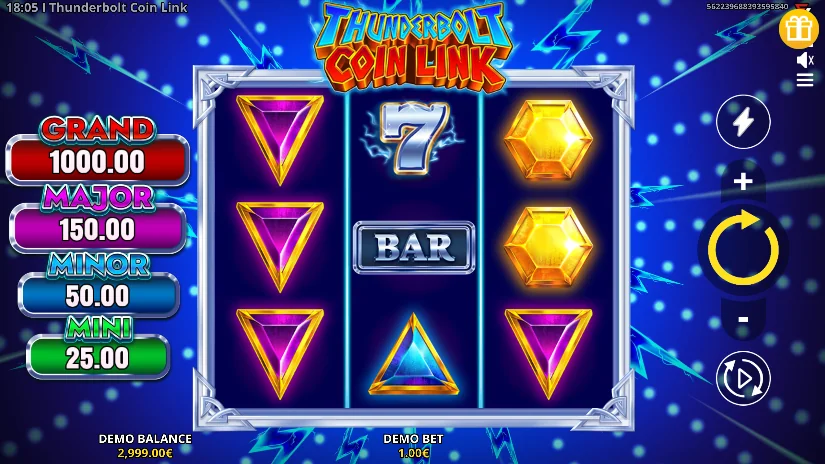
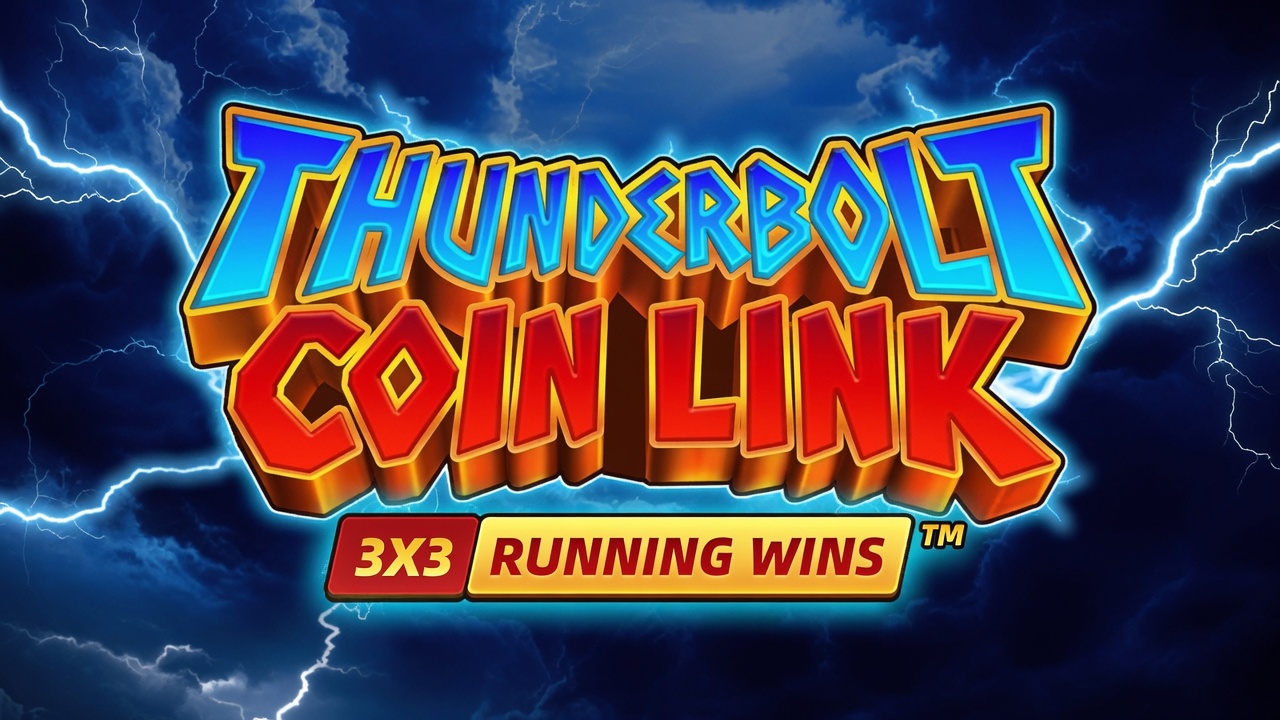
Thunderbolt Coin Link: Running Wins is a coin-collecting slot built around a mechanic that rewards persistence – the longer a qualifying spin sequence extends, the more coin values accumulate across the grid before a final payout is calculated. Developed by Fugaso under the Coin Link framework, the game uses a fixed-reel structure where standard spin outcomes and coin-lock phases operate as two clearly separated modes, each governed by its own internal logic.
The return-to-player rate sits at 96.12%, positioning it above the mid-tier average for linked-jackpot slots in its class. Thunderbolt Coin Link: Running Wins volatility is rated high, which means the payout distribution leans heavily toward infrequent but larger returns rather than steady small wins. This profile suits players who can absorb variance across longer sessions without expecting consistent mid-spin feedback.
Bet ranges are structured to accommodate both conservative and aggressive bankroll approaches, with minimum and maximum stake levels that cover a broad spectrum. The grid itself follows a 5×3 layout – conventional in dimension but mechanically distinct once the Running Wins respin sequence activates. Maximum win potential reaches up to 20,000x the stake, contingent on full-grid coin lock completion during the bonus phase.
Easy, Fast, Comfortable
The control panel is stripped down to what actually matters. Spin, autoplay, bet adjustment, and paytable access are all placed in immediately reachable positions without secondary menus obscuring the path. There is no learning curve to the interface itself – the complexity in this game exists in the mechanics, not the navigation.
Autoplay functionality includes session loss limits and single-win caps, which is a practical inclusion for players running extended sessions on high-volatility configurations. The game loads quickly across modern browsers, and session continuity – meaning the game restores its last state after an interruption – works reliably.
Accessibility features include adjustable sound levels independent of music, a turbo-spin toggle that compresses standard animation sequences without skipping any payout logic, and a persistent paytable accessible mid-spin. None of these require navigating away from the main screen. For a game with this level of mechanical depth, the interface keeps friction genuinely low.
Game Design
Theme and Graphics
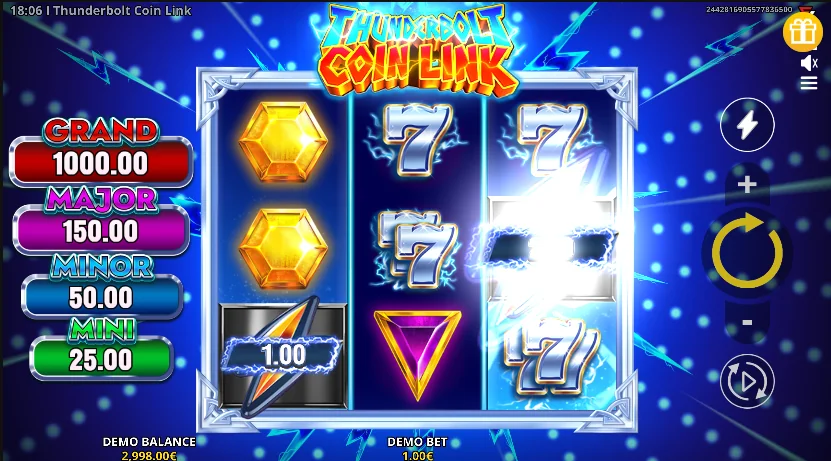
The visual language pulls from high-energy electrical aesthetics – deep blue-black backgrounds, crackling gold energy lines framing the reels, and a coin motif rendered with enough dimensional detail to distinguish it from flat icon design. The “Thunderbolt” element is present not just as a name but as a recurring visual device: lightning-styled separators between reel columns, electrified coin edges during the lock phase, and a charged atmosphere that intensifies during respin sequences.
Symbol animation quality is notably above baseline for this slot category. Coin symbols pulse with embedded light effects rather than using simple glow overlays, and the transition between standard play and the Running Wins phase involves a full-screen shift in ambient color temperature – from cooler neutral tones to a warmer, high-contrast gold palette that signals a mechanical state change visually before any UI text confirms it.
Sounds and Gameplay Experience
The audio design functions as a real-time feedback system rather than background texture. During standard spins, the soundscape stays restrained – rhythmic mechanical cues with a low-frequency baseline. When the coin-lock respin phase begins, the audio shifts register entirely: tempo increases, pitch rises incrementally with each additional coin locked, and the climax sound on final payout scales to match the return size. Small wins receive a different tonal resolution than large ones, which means audio alone communicates win magnitude before the number renders on screen.
This reactive sound architecture creates genuine tension during extended respin sequences. The progressive audio build isn’t cosmetic – it tracks the mechanical state of the bonus phase in real time, making the experience feel continuous rather than segmented into discrete spin events.
Bonuses and Symbols
Symbols in the Game
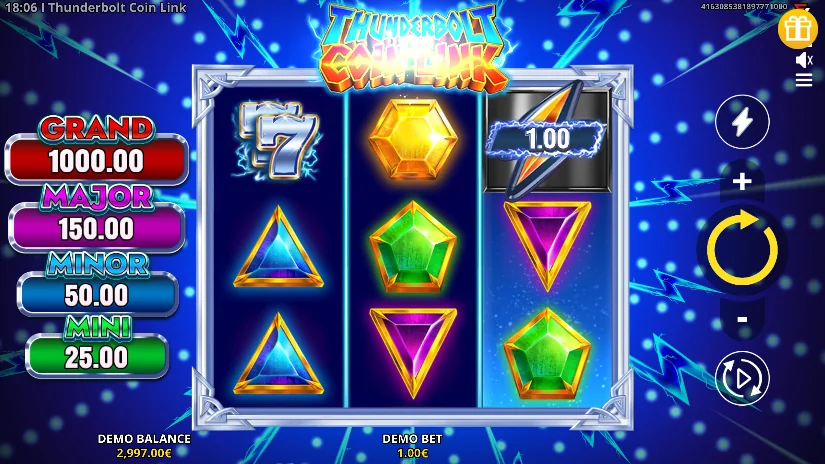
The symbol set divides cleanly into two functional categories. Standard reel symbols – card-rank icons at the lower end, thematic high-value symbols above them – operate as conventional match-three-or-more payout triggers. The second category is the coin symbol, which exists outside the normal payline system entirely. Coins carry printed values that are revealed only when locked during a respin phase; they do not contribute to standard line wins.
Wild symbols substitute across the standard symbol set on applicable paylines but do not interact with the coin-lock mechanic. Scatter symbols, where present, function as the trigger condition for the Running Wins respin phase rather than awarding multiplied total-bet payouts independently. The functional separation between these symbol types is sharp – each category operates within its own payout logic without overlap.
Bonus Rounds and Free Spins
The Running Wins respin sequence is the structural center of this game. It activates when a qualifying number of coin symbols land simultaneously during a base spin. At trigger, all non-coin symbols are cleared, the coin symbols lock in position, and three respins are awarded. Each additional coin that lands during a respin resets the counter back to three. The sequence ends either when the counter reaches zero with no new coins added or when every position on the grid is filled with locked coins – the latter being the condition for maximum win eligibility.
There is no traditional free spins round separate from this mechanic. The respin phase is the primary bonus architecture, and its depth comes from the compounding reset logic rather than from a separate round structure. Mini, Minor, Major, and Grand jackpot symbols can appear as specific coin types during the respin phase, each with a fixed prize value that adds to the total independently of coin value accumulation.
Paytable and Winning Combinations
Standard symbol payouts follow a left-to-right adjacency model from reel one. Lower-tier symbols require five-of-a-kind for meaningful returns; high-value symbols produce notable payouts from three matching. The paytable scales steeply between the bottom and top tiers – the gap between the lowest and highest standard symbol payout is significant enough that base-game returns are heavily weighted toward high-symbol combinations.
Coin values during the respin phase are independently assigned per symbol and are not fixed – a single coin can carry anywhere from a minimum multiplier to a jackpot designation. Total respin payout is the sum of all locked coin values, which means the final return depends on both quantity of coins and the specific value distribution across the locked positions.
Jackpot

Four jackpot tiers exist within the coin system: Mini, Minor, Major, and Grand. Each corresponds to a specific coin symbol variant that can appear during the Running Wins respin phase. Landing a jackpot coin locks it like any other coin, adding its fixed prize to the accumulating total. The Grand jackpot represents the highest fixed value and requires a specific coin type to appear – it is not triggered by grid fill-rate alone.
Jackpot values are not progressive in the traditional sense; they are preset amounts that scale relative to the active stake. This means the Grand jackpot figure adjusts proportionally to bet size rather than accumulating from a shared prize pool. The distinction matters for session planning: jackpot potential is stake-dependent and consistent, not subject to pool-size variance.
Mobile Device Compatibility
The game renders without layout degradation across standard smartphone screen ratios – both portrait and landscape orientations are supported, with the interface reorganizing its control placement based on device orientation rather than simply scaling down a fixed desktop layout. Touch response on bet adjustment and spin controls is accurate without requiring precision tapping.
Performance during the respin animation sequence – the phase with the highest simultaneous graphical load – remains smooth on mid-range hardware released within the last three years. Older or lower-memory devices may experience minor frame drops during the full-grid coin-lock animation, but gameplay logic continues uninterrupted regardless of render performance. No app installation is required; browser-based play functions equivalently to desktop sessions in terms of feature access and payout behavior.
Advantages and Disadvantages
Advantages
The respin reset mechanic creates genuine escalation during bonus phases – each new coin that lands extends the sequence and raises the expected total, producing real tension that is mechanically justified rather than cosmetically manufactured. The audio system amplifies this without replacing the underlying logic with theatrical noise.
RTP at 96.12% is competitive for a high-volatility linked-jackpot structure. Many comparable games in this mechanic category operate closer to 95%, making the return rate a meaningful differentiator for value-conscious players. The four-tier jackpot system adds prize ceiling variety without complicating the base respin mechanic – each jackpot coin behaves identically to a standard coin in terms of lock behavior, so no additional rules apply during the bonus phase.
The interface prioritizes function over visual complexity at every point, which is a specific design decision that high-volatility players – who need clear state feedback during extended sessions – benefit from directly.
Limitations
High volatility with a respin-dependent bonus structure means that sessions without a qualifying trigger can feel mechanically thin. Standard base-game play does not offer the same feedback density as the respin phase, and the gap between those two states is wide enough that a bad run of triggers creates extended periods of low engagement.
The 20,000x maximum win, while substantial, requires a full-grid coin lock with favorable value distribution – a condition that depends on both trigger frequency and coin value variance. Players chasing the ceiling figure should account for the compounding probability requirements rather than treating it as a routine outcome at any volatility level.
There is no buy-bonus feature. Access to the Running Wins respin phase requires a standard base-game trigger, which means controlling exposure to the bonus phase through direct stake is not an available option. For players who prefer mechanic-focused sessions over base-game variance, this is a structural limitation rather than a minor inconvenience.
Conclusion
Thunderbolt Coin Link: Running Wins is a mechanically coherent high-volatility slot built around a single well-executed system. The respin architecture is the game – everything else, from symbol hierarchy to audio design to visual state changes, is constructed to support and amplify what happens during that phase. It does not attempt to compensate for base-game variance with superficial feature layering.
The 96.12% RTP and stake-scaled jackpot structure make it more analytically tractable than many competitors in the same mechanical category. That said, the absence of a bonus-buy option and the wide experiential gap between triggered and non-triggered sessions place genuine demands on session planning and bankroll tolerance. Approached with accurate expectations about volatility behavior, the game delivers on what its mechanics promise.