Crazy Pachinko Demo – Honest Review, RTP & Volatility
Game Overview and Basic Information
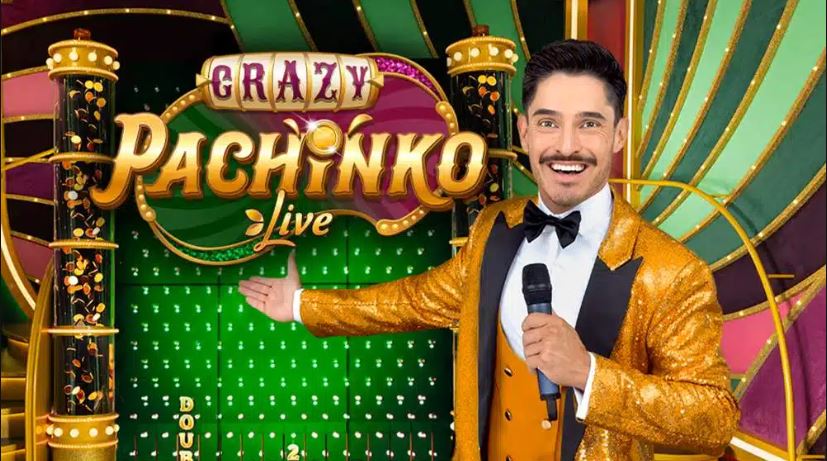
Crazy Pachinko is a hybrid arcade-slot title developed by Evolution Gaming, built around the mechanical logic of Japanese pachinko machines rather than traditional reel spinning. The game replaces standard payline mechanics with a vertical ball-drop grid where multipliers are distributed across landing zones – a structural departure that fundamentally changes how winning potential accumulates.
The certified RTP sits at 96.05%, which positions it competitively within the live casino hybrid segment. Volatility is classified as high, meaning prolonged dry sequences are a realistic expectation before significant payouts occur. The theoretical maximum win reaches 10,000x the base bet – a figure driven by multiplier stacking across multiple board positions rather than a fixed jackpot pool.
Minimum bet starts at €0.10, with maximum bet scaling to €1,000 per round depending on the operator’s configuration. The game operates on a live-streamed studio environment, combining real-time hosting with an automated drop mechanism. Round duration averages 20-30 seconds, making the pace noticeably faster than most live dealer formats.
Understanding what Crazy Pachinko actually is requires separating it from both slot games and pure pachinko machines. It occupies a distinct category: a multiplier-accumulation game show format where the outcome depends on physics-driven ball trajectory rather than a random number generator applied to symbol grids.
Easy, Fast, Comfortable
The betting interface loads within a persistent side panel visible at all times during live play. Bet adjustments require no additional menus – chip denominations are selectable with a single tap, and the confirmation step is minimal. For players switching between standard and bonus buy modes, the transition is direct, without navigating submenus.
Accessibility across screen sizes is handled competently. The live video feed, bet panel, and multiplier board coexist on a single screen without overlap on devices down to 5.5-inch displays. The interface does not collapse or require horizontal scrolling in portrait orientation, which matters practically during faster-paced sessions.
New players can access a free play demo version of Crazy Pachinko through select casino platforms without registration. This demo replicates the live mechanic using simulated drops, giving a functional representation of peg-board variance before committing real funds. It is one of the more accurate demo implementations in the live hybrid category, since the drop physics are preserved.
The autoplay feature is absent in the traditional sense – live rounds run continuously on a fixed schedule regardless of individual player action. This removes the option to step away mid-session, which some users find constraining. Bet management during consecutive rounds requires active attention rather than pre-set automation.
Game Design
Theme and Graphics
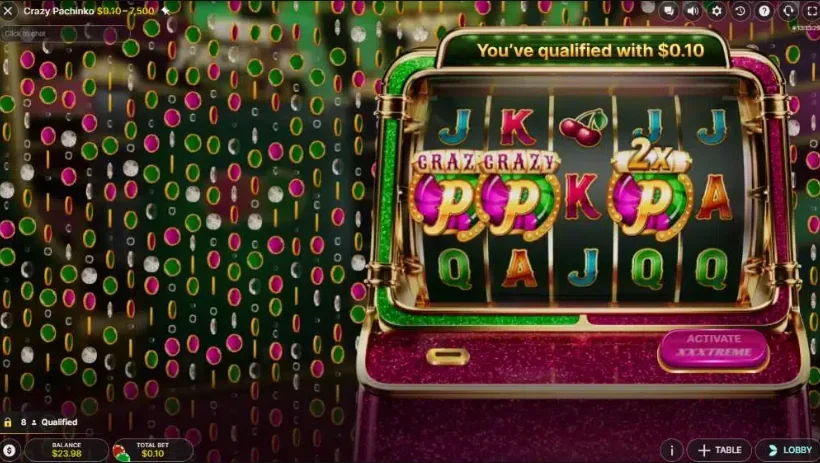
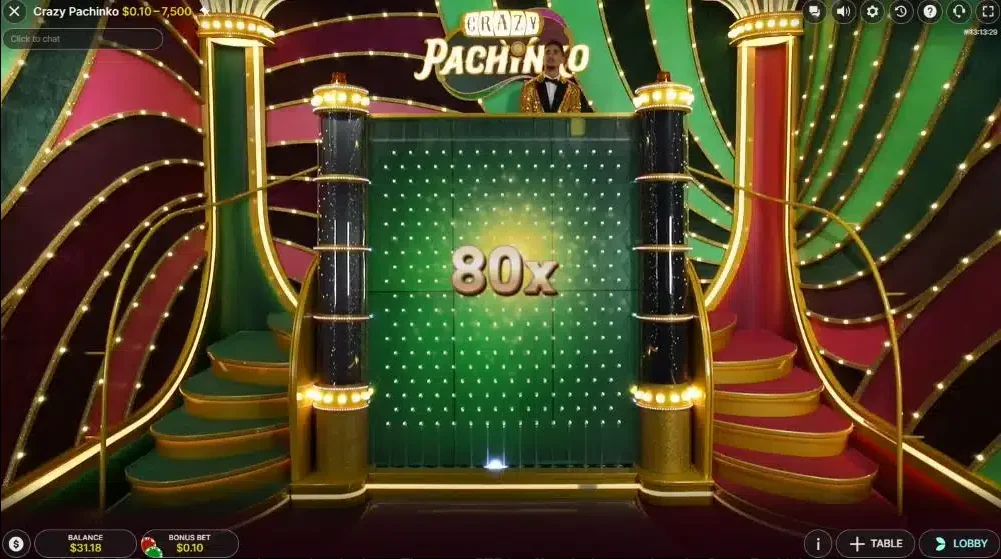
The visual language of Crazy Pachinko draws from neon-lit Japanese arcade culture – dense with color contrast, metallic peg structures, and a board design that intentionally evokes the sensory overload of a physical pachinko parlor. The multiplier zones at the bottom of the board are color-coded by value tier, creating an immediate visual hierarchy without requiring players to read labels during fast rounds.
The live studio set extends the theme with backlit panels and kinetic lighting that shifts in response to high-multiplier outcomes. Rather than a static backdrop, the environment reacts dynamically – when a “Crazy Time” bonus triggers, the lighting palette changes across the entire set. This integration between game event and visual environment is more deliberate than in many competing live formats.
The physical Crazy Pachinko board itself is the visual centerpiece – a tall, transparent peg structure with balls moving in real time. High-definition camera positioning allows the trajectory to be followed across the full descent. For players accustomed to animated slot reels, the tangibility of the physical drop mechanism carries distinct visual credibility.
Sounds and Gameplay Experience
The audio design operates on a layered system: ambient arcade soundscape runs continuously beneath event-triggered effects. Ball drops generate a distinct percussive sequence that intensifies as the ball approaches lower multiplier zones. Landing on high-value slots triggers a separate audio climax distinct from standard outcomes – the sound design actively communicates outcome significance rather than playing uniformly across all results.
The live host role is central to the experience in a way that recorded commentary in standard slots cannot replicate. Hosts respond to real-time outcomes, and during bonus rounds their energy calibration shifts noticeably. Whether this enhances immersion or creates friction depends significantly on player preference – it is not a neutral element of the experience.
The combination of physical drop mechanics, live audio-visual feedback, and host interaction creates an engagement model that competes more directly with game show television formats than with conventional casino games. The rhythm of play is externally paced, which contrasts sharply with the player-controlled cadence of standard slots.
Bonuses and Symbols

Symbols in the Game
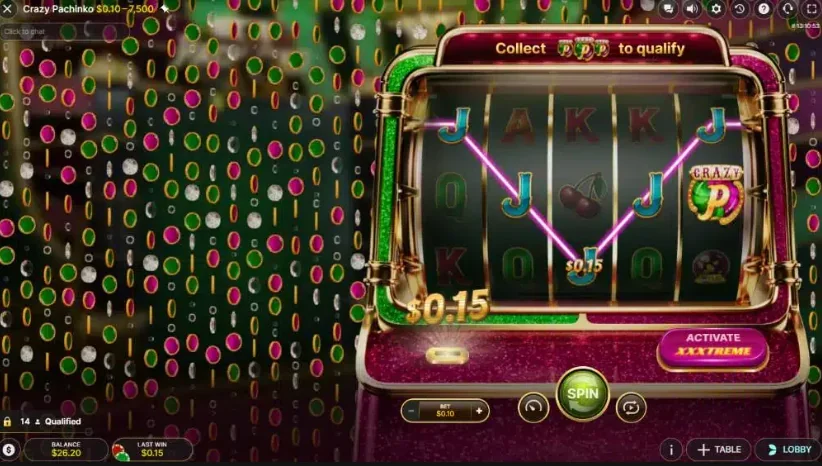
Crazy Pachinko does not use symbols in the conventional slot sense. Instead, the board contains numbered multiplier slots at the base of the peg grid, distributed across positions ranging from 1x to values extending into the thousands under bonus conditions. These multiplier slots function as the outcome determiners – their placement is fixed, but ball trajectory through the randomized peg structure produces variable landing distributions.
Two special designators appear on the board: “Double” panels and “Crazy Time” panels. Double panels apply a 2x multiplier to all current board values before the ball drops for that round. Crazy Time panels trigger the bonus game sequence, removing the standard drop mechanic entirely for that round. These are not symbols in the icon sense but structural elements of the board that alter the scoring architecture of individual rounds.
Bonus Rounds and Free Spins
The primary bonus mechanism is the Crazy Time bonus round, accessed when the ball lands on a designated Crazy Time panel. During this round, the standard board is replaced by a large spinning wheel with multiplier segments. The wheel spin is conducted live, with the outcome determined by a physical pointer rather than a digital algorithm – this distinction matters to players who weigh perceived fairness.
There are no free spins in Crazy Pachinko – the structure has no equivalent mechanic. The closest analog is the Crazy Time wheel itself, which can deliver compounding multipliers across multiple wheel sectors when the pointer lands on qualifying zones. A single Crazy Time activation has historically produced session-defining payouts, though the frequency of activation is constrained by high volatility conditions.
The Double panel modifier, while not classified as a bonus round, materially affects payout potential on any round it appears. When stacked – two Double panels activating before a single drop – all board multipliers quadruple, which can convert mid-tier landing zones into disproportionately high payouts.
Paytable and Winning Combinations
Standard board multiplier values in base configuration range from 1x at outer edges to 50x at central positions. The exact distribution varies by operator version, but central-weighted higher values reflect standard pachinko probability architecture – landing in the highest zones requires more precise trajectory through the peg field.
During Double activation, every multiplier on the board doubles before ball release. There is no paytable in the traditional printed sense – multiplier values are visible on-screen in real time, and any changes from panel activations update the display before the drop occurs. Players evaluating payout potential must read the board state at the moment of betting rather than referencing a static pay schedule.
Total round payout equals the player’s bet multiplied by the multiplier value in the landing slot, plus any Double-stack adjustments active in that round. The calculation is linear – no payline adjacency rules, no symbol cluster requirements, no modifier combinations beyond Double stacking.
Jackpot
Crazy Pachinko does not carry a progressive jackpot pool. The maximum win figure of 10,000x is a theoretical ceiling derived from optimal multiplier stacking scenarios – multiple Double activations followed by a Crazy Time bonus where the wheel lands on its highest-value segment. This ceiling is documented in the game’s mathematical specifications but does not represent a guaranteed jackpot event triggered at a defined frequency.
No seed amount exists, no jackpot meter accumulates, and no separate jackpot pool is funded by player wagers. For players specifically seeking progressive jackpot mechanics, this distinction is consequential. The high max win is real mathematically but functions as an extreme variance outcome rather than a structured prize ladder.
Mobile Device Compatibility
The live stream component of Crazy Pachinko adapts to mobile connections through adaptive bitrate delivery. On stable 4G connections, the video feed maintains sufficient resolution to track ball movement across the peg board. On 3G or congested networks, resolution degrades but the stream remains functional – though following precise ball trajectory becomes more difficult at lower render quality.
Touch controls on the bet panel respond accurately on both iOS and Android environments. The live video occupies the upper portion of the screen in portrait mode, with betting controls anchored below – a layout that keeps both elements accessible without switching between views. Rotating to landscape mode expands the board view but compresses the bet panel, which some players find less convenient during active sessions.
Battery consumption is moderately elevated compared to standard slot games due to continuous live video processing. Extended mobile sessions should account for this, particularly on older hardware where thermal throttling can affect stream continuity.
Advantages and Disadvantages
Advantages
The physical drop mechanism provides a transparency that purely digital outcomes cannot replicate. Watching the ball traverse the peg board in real time removes any ambiguity about outcome generation that players sometimes associate with RNG-based systems.
The multiplier stacking system – specifically Double panel accumulation before high-value Crazy Time activations – creates genuine high-ceiling sessions that standard slot volatility profiles rarely match. The path to maximum win, while extremely rare, is mechanically logical rather than opaque.
The free play demo accurately replicates the core drop mechanics, which is uncommon for live hybrid formats. Players can form a realistic understanding of board variance before funding real sessions, rather than encountering a simplified or entirely different simulation.
Round pacing is fast enough to sustain engagement without the extended dead time that some live dealer formats produce between results. The 20-30 second cycle maintains momentum across sessions.
Limitations
High volatility in a format without autoplay creates a specific management challenge. Players cannot pre-set loss limits within the game itself and must maintain manual discipline across rapid round cycles. This combination increases exposure risk during negative variance sequences.
The absence of free spins or retriggerable base-game bonuses means there is no gradual escalation mechanic. Sessions either hit multiplier stacking events or they don’t – there is limited middle ground between flat base results and high-payout rounds.
Live studio availability creates dependency on operational schedules. Unlike standard slots that run independently on player demand, Crazy Pachinko requires an active live broadcast. While the game typically runs continuously, scheduled maintenance windows can interrupt access without warning.
The host-driven format is not neutral to all player types. Players who prefer low-stimulation environments or who play with audio off lose a meaningful portion of the engagement design, since the audio-visual host interaction is integral to the game’s pacing signals.
Conclusion
Crazy Pachinko occupies a category of its own – it is neither a slot nor a conventional live dealer game, and evaluating it through either framework produces an incomplete picture. Its core value proposition rests on physical transparency, multiplier ceiling depth, and a pace that sustains engagement without sacrificing session control entirely to automation.
The 96.05% RTP combined with high volatility means this format rewards patience and bankroll discipline more than aggressive session play. The Crazy Time bonus remains the primary vehicle for exceptional session outcomes, and its activation frequency is genuinely infrequent – players should construct their bankroll expectations around that constraint rather than treat it as a regular event.
For players who want to assess the format before committing real funds, the demo version is a functionally accurate starting point. The gameplay structure, drop physics, and multiplier architecture are all represented faithfully enough to form a considered opinion about whether the format suits individual risk tolerance and play style.